04 — Personal Project · 3 months
Janapada
A behavioral UX exploration through interactive game design
A behavioral UX exploration through interactive game design
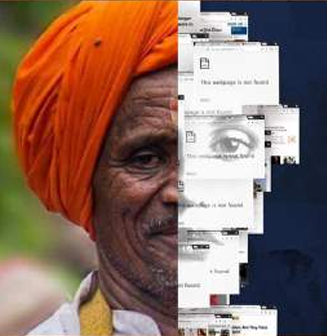
Karnataka has one of India's richest traditions of folk music — Dollu Kunitha, Yakshagana, Kamsale, Veeraghase — each with its own performers, instruments, rhythms, and stories. Yet younger generations engage with this culture passively, if at all. They consume it at festivals but don't understand it.
The question this project set out to explore was not how to document folk music, but how design could spark genuine curiosity and participation among people who wouldn't seek it out on their own.
The answer was a game.
Online and field research with folk musicians and cultural experts
Defined core mechanics, designed components, built playable prototype
Three rounds of playtesting, behavioral UX study, final refinements
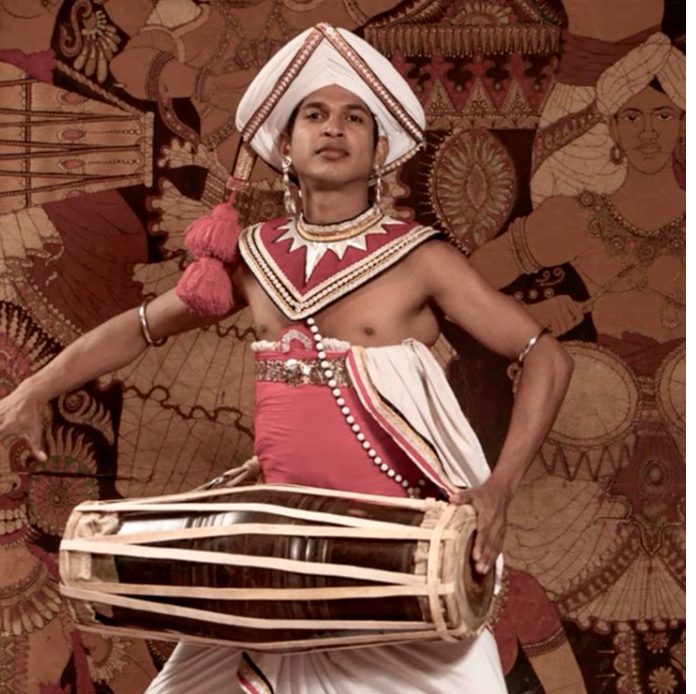
Karnataka folk performance tradition
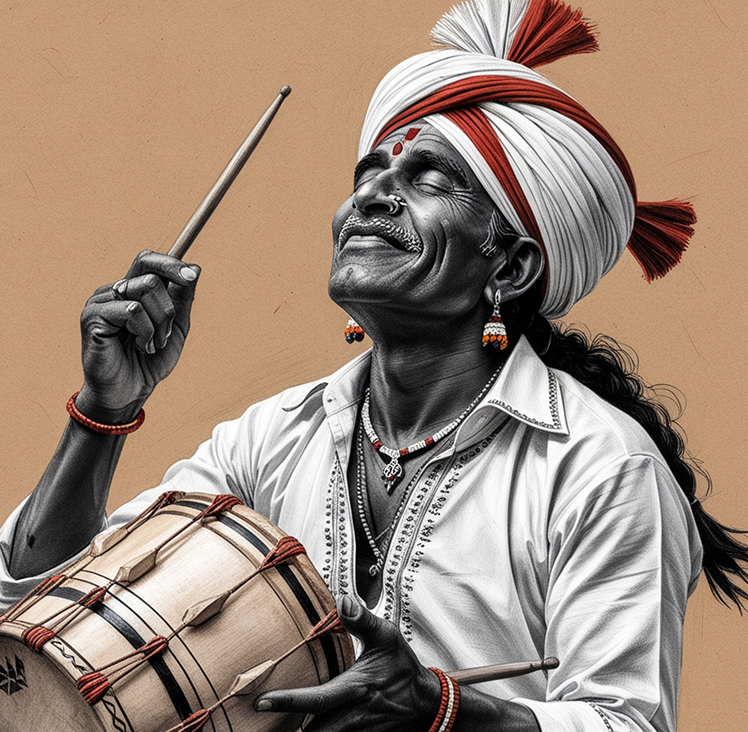
Studied folk forms across Karnataka — Dollu Kunitha, Yakshagana, Kamsale and others — to identify patterns of performance, collaboration, and storytelling.
Researched folk music monetization, audience engagement, and cultural relevance in today's digital era.
Mapped out the structure of a performance — what kinds of stories are communicated through folk music, and who makes them possible.
Community, values, and audience relationships
Earnings, modernization, and monetization challenges
Origins, evolution, and legacy — how stories shape culture
Influence of regions and migration on musical styles and interpretation
Four patterns emerged across every interview — each one eventually shaped a mechanic in the game.
Folk artists aren't possessive about their art. They want it to pass on from generation to generation. The act of sharing is inseparable from the art itself — and this became central to the game's spirit.
Every performance depends on multiple interconnected roles — narrators, dancers, instrumentalists, makeup artists. No single person makes a performance. This became the central mechanic of the game.
Limited resources and improvisation are features of folk performance, not bugs. A rare instrument becomes central to a performance because of its scarcity. This informed the strategic resource system in gameplay.
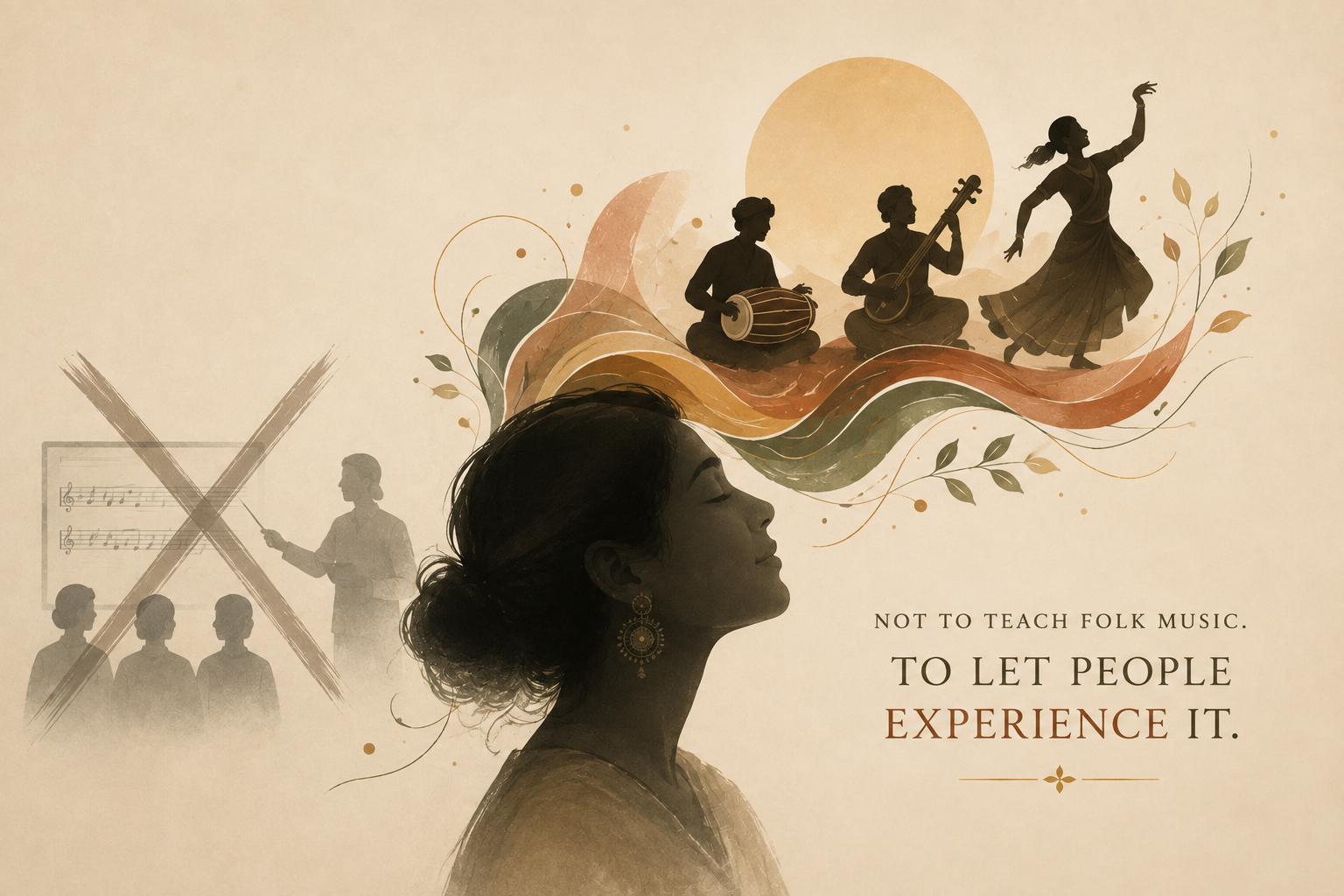
Younger audiences engage passively with culture — they consume it at festivals without understanding it. Design must ignite curiosity through play, not explanation. You cannot teach folk culture; you can only create the conditions for someone to discover it.
Shift from representing folk music exhaustively → to creating curiosity-driven participation.
The original brief was to document Karnataka's folk music ecosystem. The research changed it. Folk culture isn't something that can be explained into relevance — it needs to be experienced.
A game allows embodied understanding — players experience the challenges and rewards of hosting a folk performance firsthand.
The goal was not to educate. It was to let players experience its essence — collaboration, rhythm, resource management, and community — through the act of hosting their own performance.
When someone succeeds in assembling a Kamsale performance from the ground up, they don't need to be told what a Kamsale performance requires. They already know.
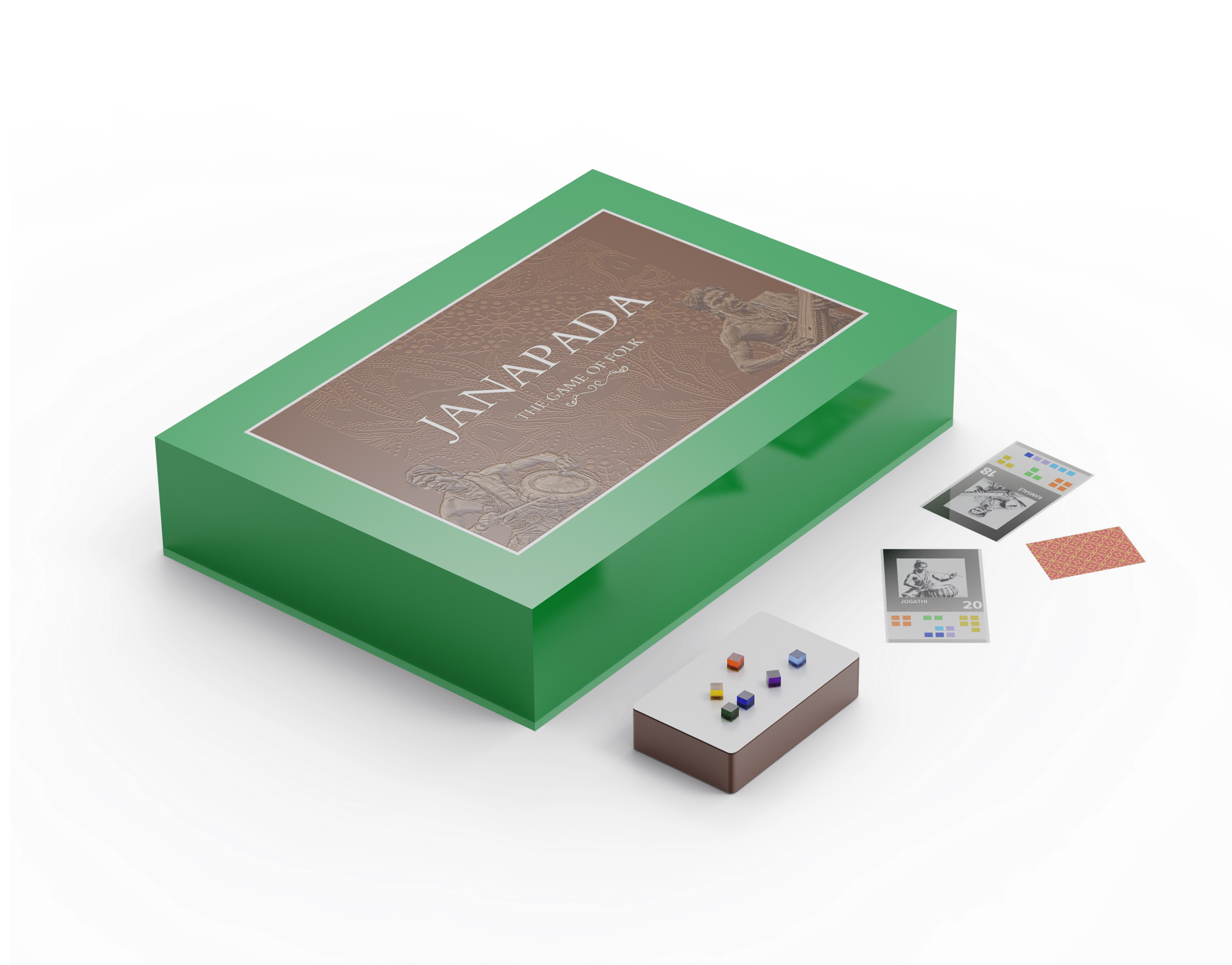
Players take on the role of performance organizers, competing to be the first to successfully host five folk performances.
Be the first player to complete five folk performances as dictated by the Performance Cards you collect. First to five wins.
Spend coins to assemble the narrators, dancers, makeup artists, and instrumentalists that every performance needs — in different combinations for each show.
Coins are finite. Strategy matters. Booster Cards let you upgrade or swap components — adding unpredictability and forcing players to adapt on the fly.
Every folk performance is a collaborative act built from real roles. The game's components aren't abstract — they represent the actual people who make Karnataka's folk culture alive.
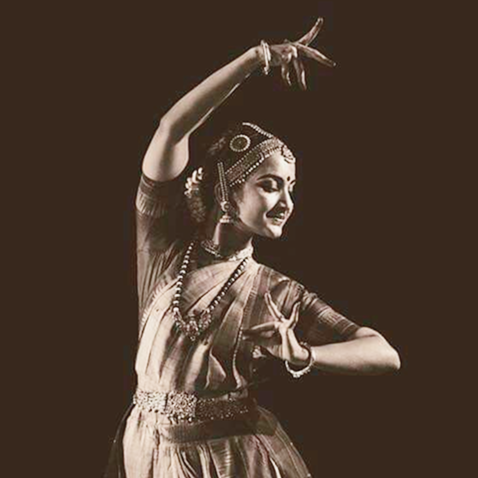
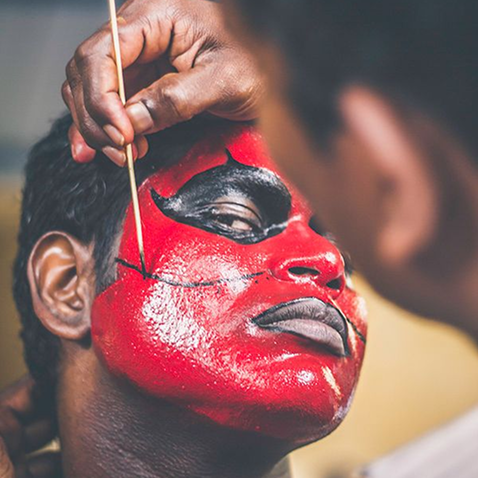
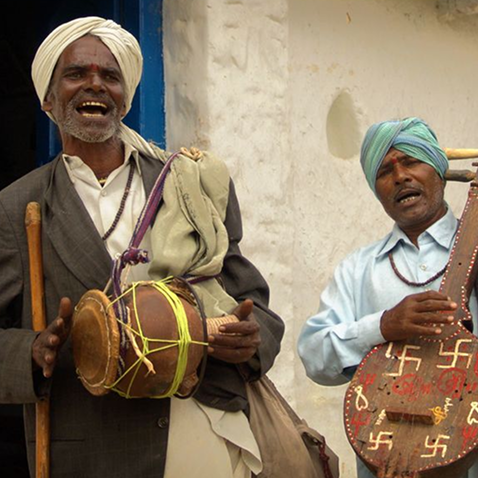
Each colour corresponds to a contributor type and appears on every Performance Card — showing exactly which roles are needed to stage that folk form.
The components are arranged on a stage platform during play. The placement signifies the cost of acquiring each contributor — more expensive roles occupy higher positions, creating visual price clarity without any text.
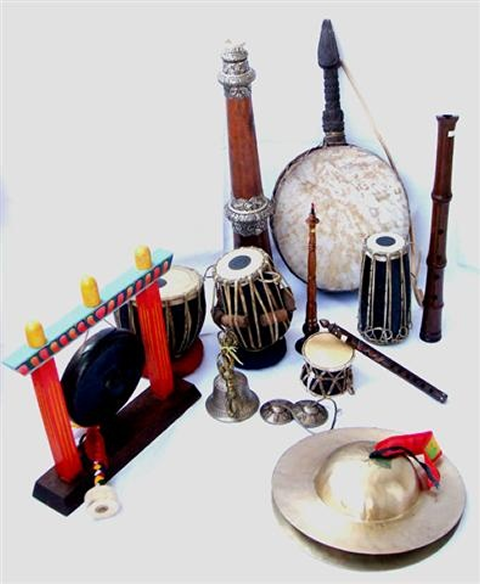
Instruments are divided into three categories based on rarity. Interviews with folk singers revealed how rare traditional instruments fuel creativity and create unique melodies — so resource limitation became a deliberate driver of strategy.
Performance Cards are the heart of the game. Each card represents a distinct Karnataka folk form — and defines exactly which contributors are needed to stage it. The aim is to collect the most cards the fastest.
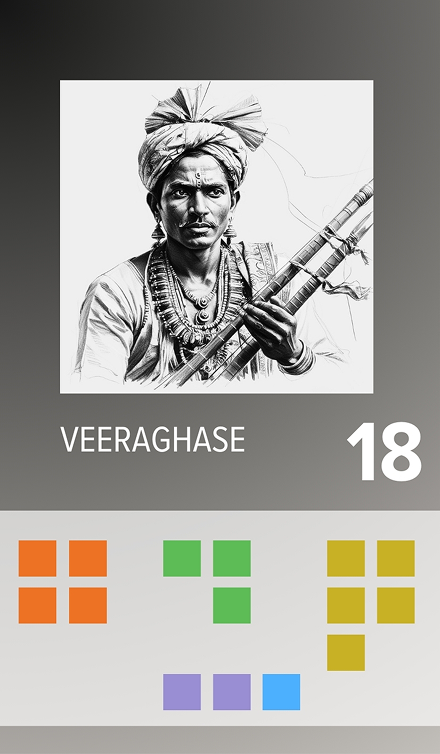
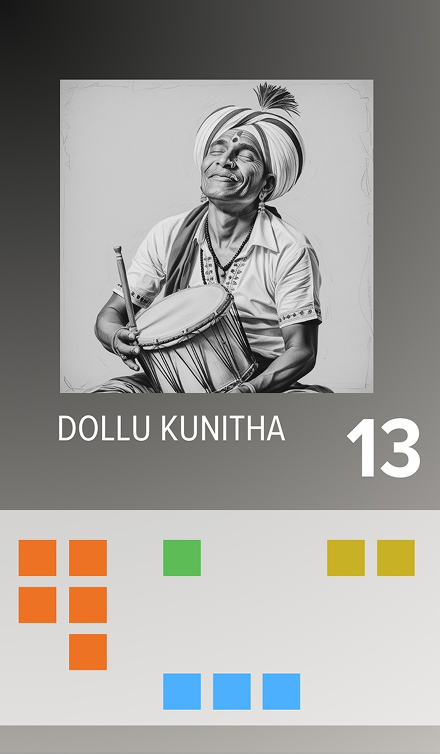
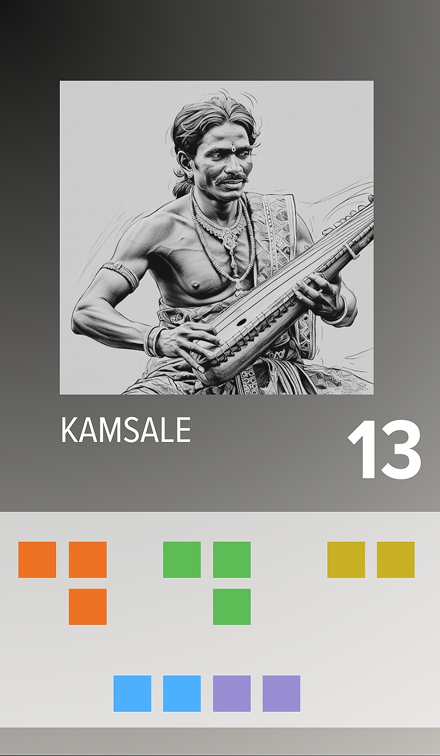
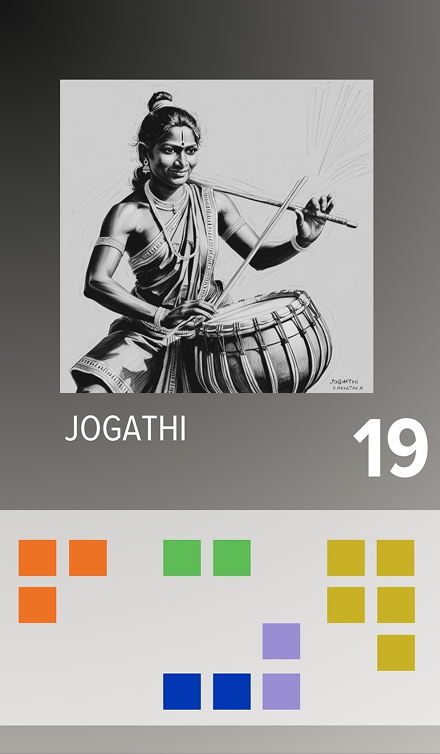
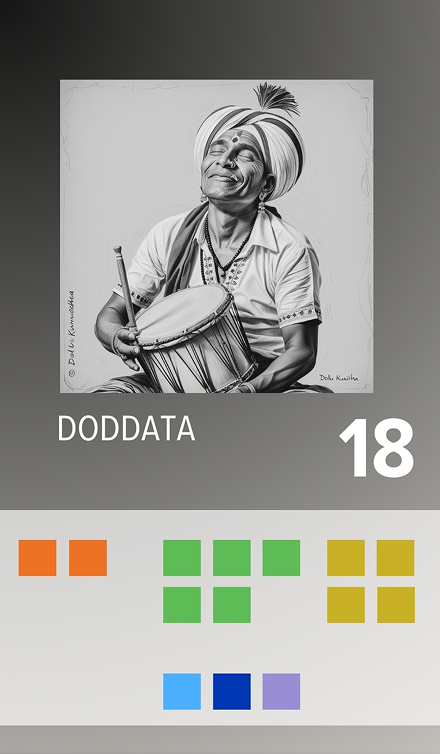
Each card's colored grid shows exactly which combination of contributors is needed — different for every folk form, reflecting the genuine differences in how each tradition is performed.
Every card has a QR code on the reverse — intentionally unexplained. What players find when they scan it became the basis of a behavioral UX experiment. More on that below.
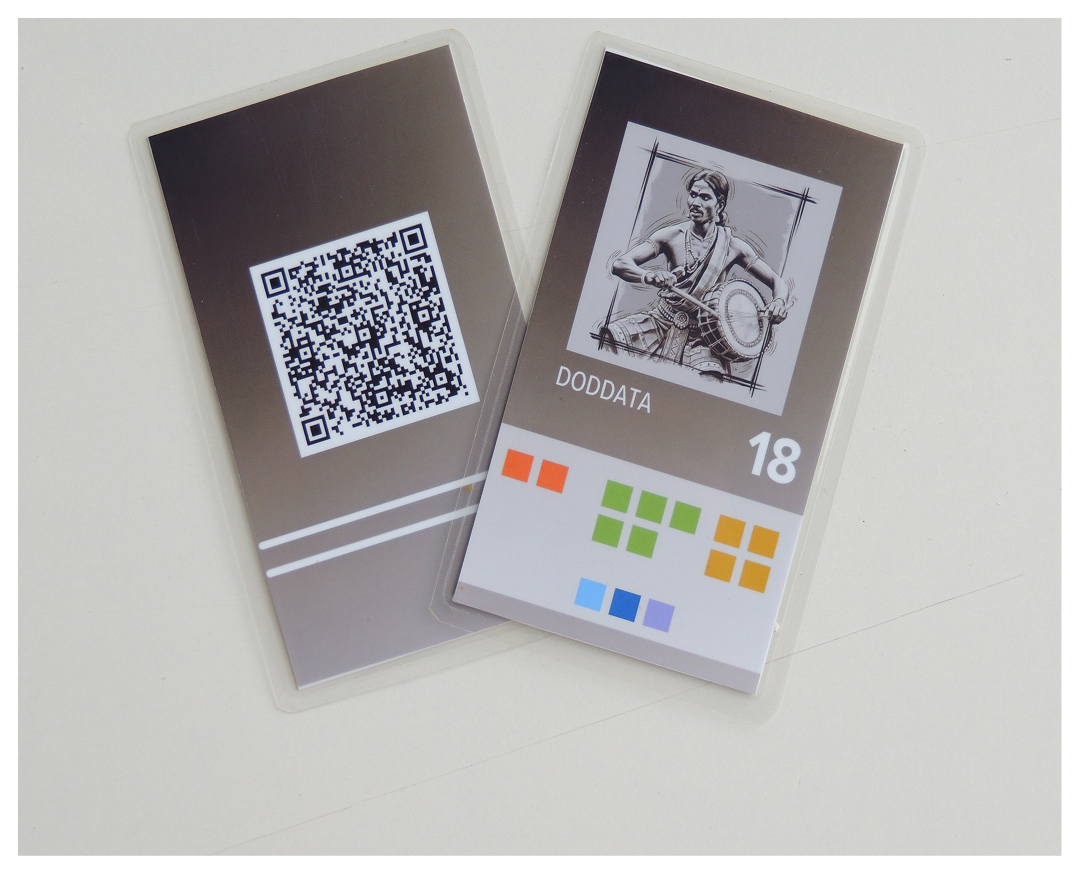
The front shows the folk performance, value, and contributor grid. The back carries a QR code that players never receive instructions for. Whether they scan it — and what they feel when they do — became an experiment in curiosity-driven design.
The gameplay loop is simple to understand but demands strategy. Every decision — which contributors to buy, when to play a Booster Card, which Performance Card to target next — involves trade-offs that mirror how a real folk performance organizer thinks.
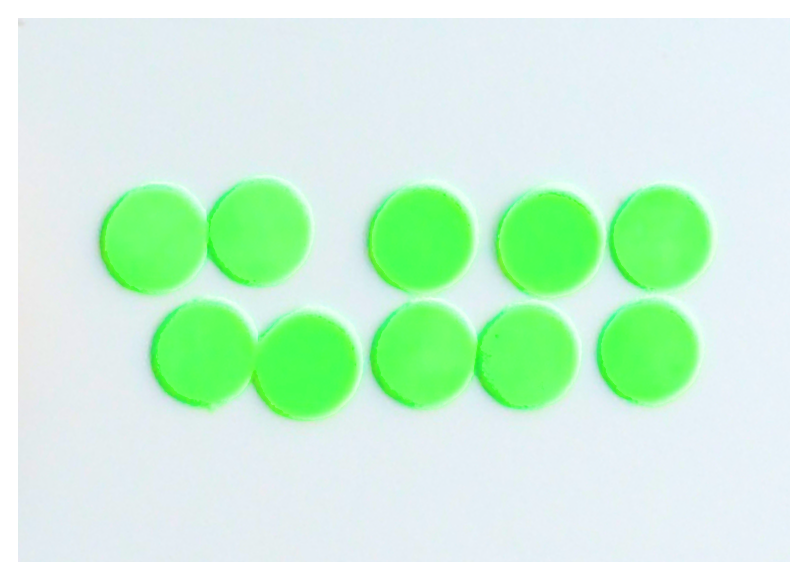
Players start with a fixed number of green coins and use them to purchase contributors — roles, instruments, props, and costumes — for their performances.
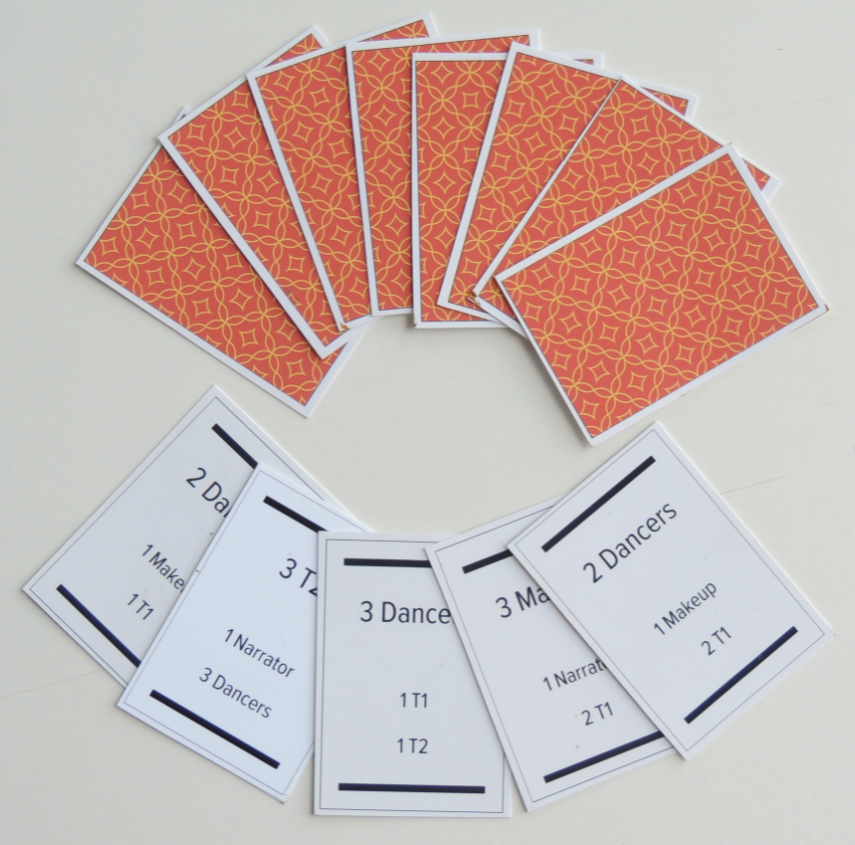
Booster Cards let players swap or upgrade components, adding unpredictability. Use them to match your assembled contributors to the requirements of upcoming Performance Cards.

When your arrangement matches a Performance Card, place it on the stage. First to host five performances wins — but the path to five demands constant adaptation.
Three rounds of playtesting with participants who had no prior exposure to the game. Their confusion and delight — in equal measure — shaped the final design.
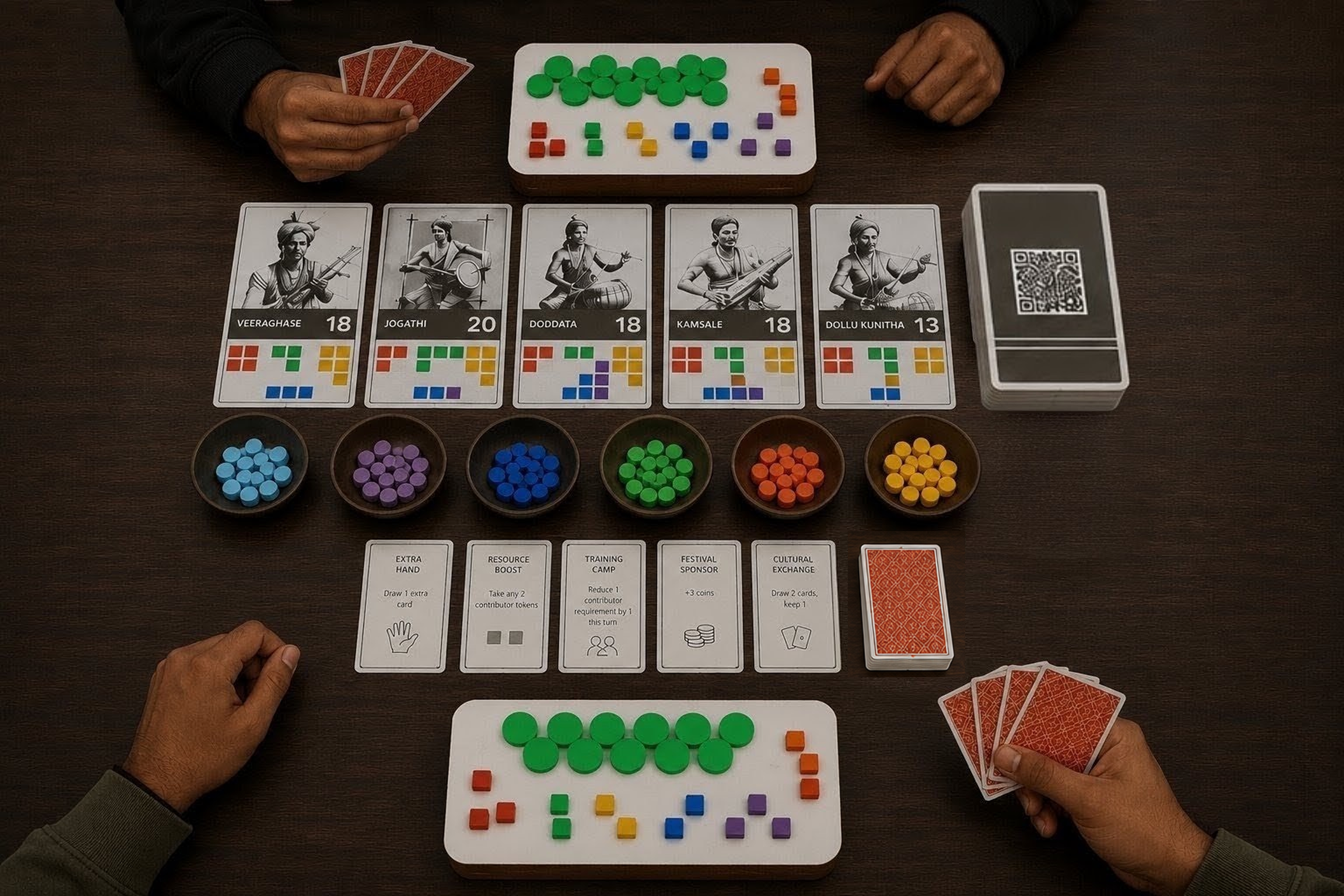
Representative gameplay layout showing a typical two-player playtesting session. The arrangement is intended to illustrate how components are organized during gameplay.
"I kept mixing up roles; it's hard to remember who does what."
Led to the introduction of color-coded categories and icons for each contributor type, allowing recognition at a glance rather than relying on reading.
"It's cool that I now know what goes into a folk show. Never thought about the behind-the-scenes part."
Confirmed that the game successfully connects players to cultural depth through interaction, not instruction. The learning emerged as a byproduct of play.
"I was confused at the start, but once we played a few rounds, it all clicked."
The learning curve was high initially. Adding a visual quick-start guide made the game significantly easier to grasp on the first play.
The QR codes printed on the back of every Performance Card were intentionally left unexplained. No instructions. No hints during gameplay. Nothing in the rules.
The objective: observe how players interpret an unexplained visual cue — and whether emotional investment in the performance they'd built would naturally drive them to explore what lay behind it.
"If players are emotionally invested in the performance they built, they will be naturally motivated to explore what lies behind the QR in the performance card."
Real music, playing for the folk form they'd just performed
Players who scanned expected a score update, a bonus, or an easter egg. What they found was a curated YouTube playlist of the actual folk music group. The performance card they held and the living culture behind it suddenly felt connected — in a way no explanation could create.
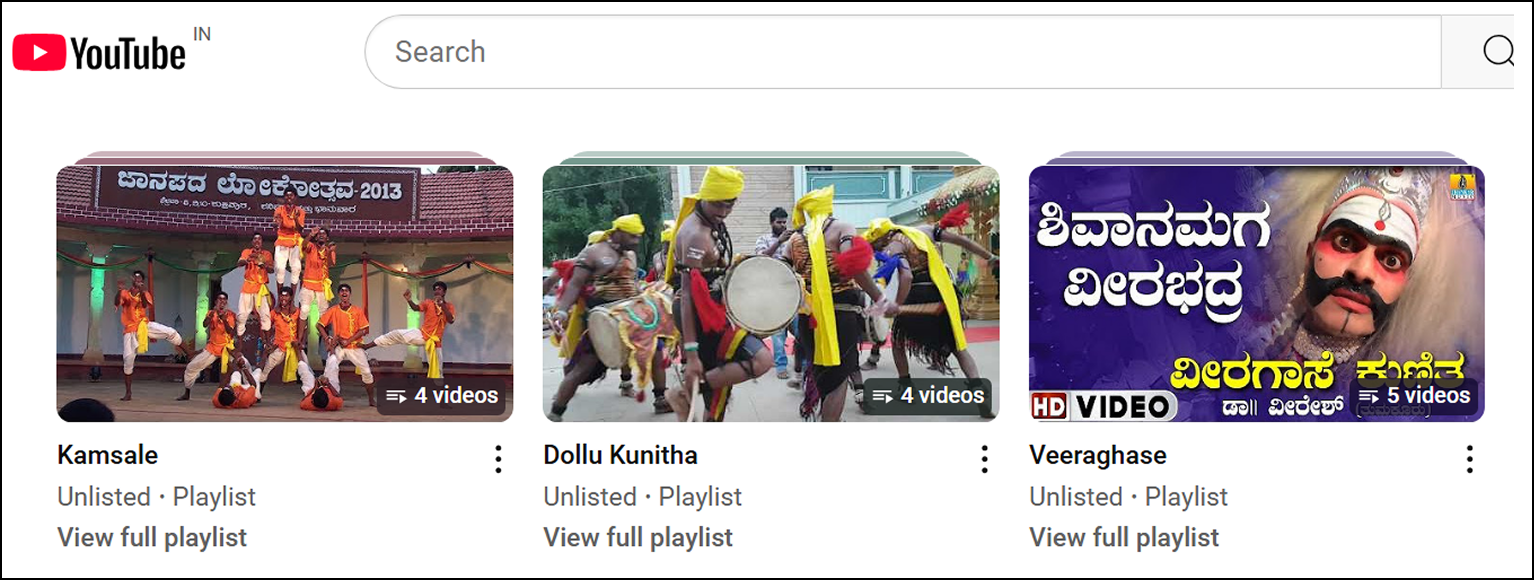
I thought it would show my score, but it played a song — that was such a nice surprise.
I didn't expect real music; it suddenly made the performance feel alive.
It made me want to scan every card to hear how different each performance sounded.
"The unexplained QR design successfully triggered curiosity-led exploration — a key behavioral UX outcome. Instead of instructing users, design can guide exploration through intent and reward — letting discovery itself become part of the experience."
Playtesting and the QR study produced a set of behavioural insights. Each one was translated directly into a design response — ensuring the game was built around how people actually behave, not how we hoped they would.
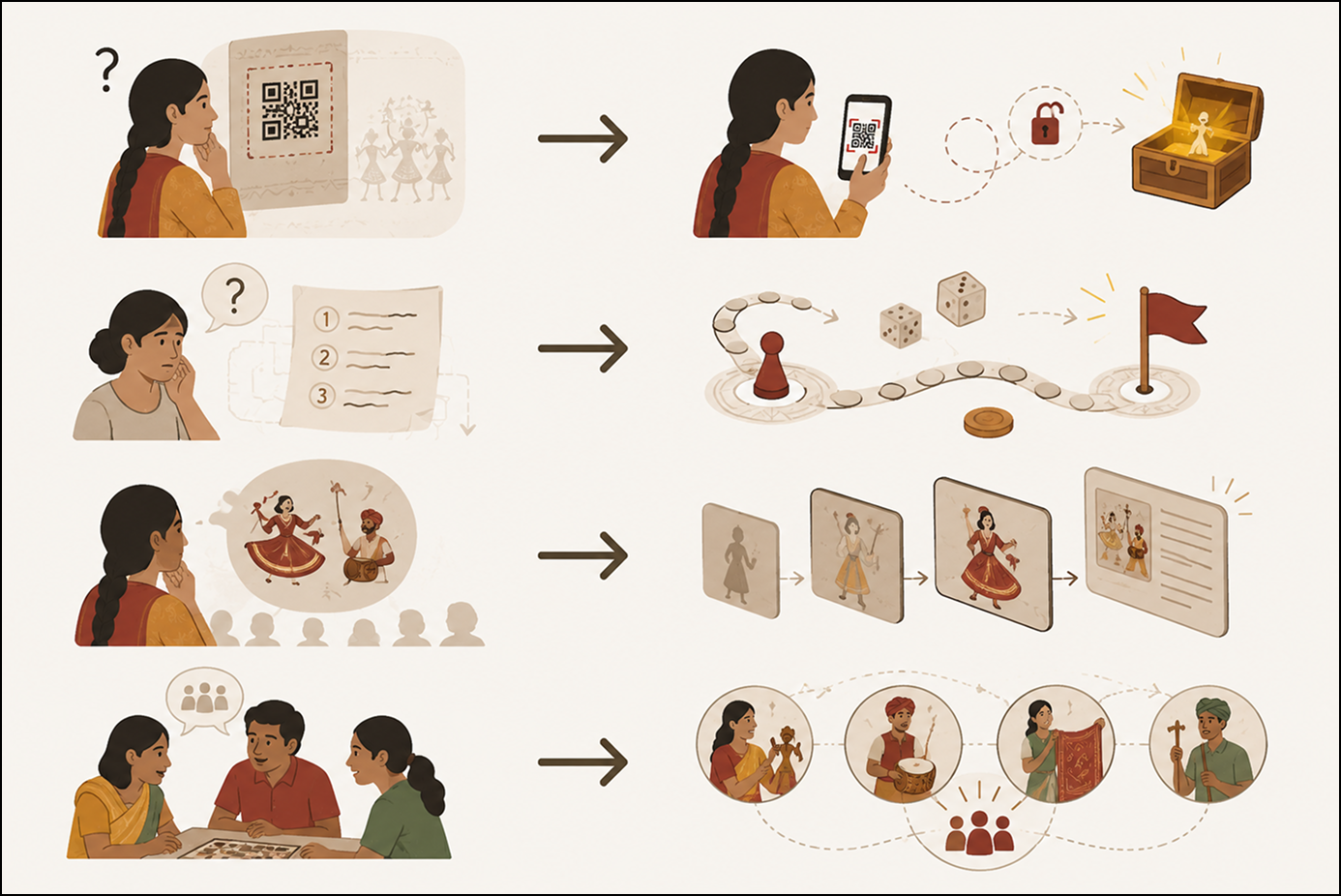
Curiosity drives exploration
Hidden QR-based interactions that reward discovery without demanding it
Initial hesitation in unfamiliar systems
Onboarding through play — the concept reveals itself progressively as the game unfolds, not upfront
Cultural unfamiliarity creates distance
Progressive disclosure instead of explanation — players encounter culture through gameplay mechanics, not reading
Engagement increases with participation
Role-based mechanics requiring active contribution — every player must commit to assembling their performance
Building Janapada shifted how I think about design. The game became a testing ground for ideas that apply far beyond board games.

The QR feature and Booster Cards created unexpected emotional highs — moments of genuine delight that made players want to play again. Designing for surprise, not just utility, builds repeat engagement in ways that smooth, predictable experiences cannot.
Folk culture can't be taught; it must be experienced. Once the game became the primary interface for cultural encounter — rather than a presentation or a pamphlet — the connection players felt was qualitatively different. Richer. More durable.

Complexity that unfolds gradually keeps users motivated and curious. Front-loading all the rules killed early engagement. Revealing mechanics layer by layer — through doing, not reading — kept the learning curve from feeling like a wall.
When there are characters, a setting and a concept that doesn't lecture but instead invites you into a world — people reach and remember faster. The folk performers on the cards weren't illustrations. They were characters with histories.